There are growing doubts about banks and there can be little doubt we are on the edge of a "run on banks". Bank of America and Citigroup are at the top of the lists. I have to admit, I have an account at both banks--yikes.

As doubt and angst grows , the Obama administration is announcing that a review of 20 major banks is forthcoming. This review of banks is often known as a stress test. Stress testing has a lot of people worried. They reason that stress testing will likely scare the heck out of investors. If Nouriel Roubini is right this will leave no choice but to nationalize. Roubini, who coined the term Zombie bank, has been saying for sometime that the banks are broke. I don't think there is much doubt that if all assets were marked to the market this would prove to be true.
One problem with pricing toxic assets and distressed assets in banks is that no one knows the real price. The system is basically frozen with little trading taking place. Sooner or later, something has to to give.
Toxic assets, nationalization, Zombie bank, these are all terms that are hanging over banks like a tornado cloud just waiting to touch down.
What do I think? Let's get it all out in the open. Obama is taking heat from the likes of Bill Clinton for being too pessimistic. I think the American public is very pessimistic. Markets don't go up when investors are uncertain or pessimistic. The only way out of this trap is to bring it all up on to the table and let us take a look at this ugly situation.
My guess is that once the true extent of the problem is known it will be quickly discounted in the stock market. Once that occurs we can go about solving that problems instead of letting the problems hang out their like an impending guillotine over our heads.
The market is going down until it fully discounts the economic problems we are facing. For me, the sooner it happens the better. I am starting to feel very bullish long term on stocks (still very bearish short term). But, I learned a long time ago that you make a lot better returns in the stock market when times are certain, rather than uncertain. Who wants to stand in front of a roaring freight train--not me.
I get the feeling that President Obama is going to let it all hang out. I bet he will receive lots of criticism from people suffering from Rick Santelli syndrome--better know as the "ignorance is bliss syndrome". Many are going to attack President Obama for telling too much. Well I think he said he intends to make things transparent. It is time for us to get our heads out of the sand and get back to doing the kinds of things that made America great. Get out the spoon--we all need a great big dose of Castor oil.
Subscribe to EF Hutton via Email
U.S. bank stress tests to show capital needs: source
By David Lawder
WASHINGTON (Reuters) - Financial regulators will soon launch a series of "stress tests" to determine which of the largest U.S. banks should get bigger capital cushions in case of a deeper recession, a person familiar with Obama administration plans said on Saturday.
The person, speaking on condition of anonymity, said if institutions were found to need additional capital, financial authorities would provide them with an "extra cushion of support."
Banks are expected to receive additional information about the tests in the coming week from regulators.
The largest U.S. banks are "well capitalized" for current conditions, the source said, but the Obama administration wants to ensure they can withstand a more severe economic climate and play an important role in helping restart the flow of credit.
Initial plans for the stress tests were announced on February 10 as part of Treasury Secretary Timothy Geithner's bank stabilization plan, but the source on Saturday for the first time linked the tests to additional government support for large banks. That person did not specify what form any extra capital cushion may take.
Little is known about the form of the stress tests, but the person described them as "consistent, forward looking and conservative."
The Obama administration tried on Friday to ease market fears the government was poised to nationalize some large banks that are struggling with losses and a lack of confidence, notably Citigroup and Bank of America.
Bank shares fell sharply, with Citigroup plunging 22 percent to below the $2 fee of a typical automated teller machine, or ATM, and Bank of America trading around the $4 level.
White House spokesman Robert Gibbs said on Friday, "This administration continues to strongly believe that a privately held banking system is the correct way to go."
That was quickly echoed by a statement from the U.S. Treasury.
INVESTORS LOSE CONFIDENCE
Citigroup and Bank of America have each received $45 billion in government capital in recent months and guarantees against losses on portfolios of illiquid mortgage assets -- aid that now exceeds their market value.
With investors losing confidence in the sector as recessionary losses on real estate and commercial loans mount, analysts say the government may have to do more to prop up the largest banks.
But rather than opting for a sweeping takeover, the government may act more incrementally, demanding a little more control every time Bank of America or Citigroup seeks more capital, analysts said.
Major interventions in financial institutions, such as Bear Stearns 11 months ago, American International Group in September and a second-round investment in Citigroup, occurred just after major drops in share prices made it clear they could not raise private capital.
The government "will try to do everything they can before they nationalize banks, but they may ultimately do it," said Lee Delaporte, director of research at Dreman Value Management, which has $10 billion under management.
"The bank stocks are telling you nationalization is going to happen," Delaporte added.
Thus far, the Treasury has put up about $235 billion for banks largely by purchasing only preferred shares to avoid diluting common shareholders. Under Geithner's revamp, those injections could come in the form of shares that could be converted to common equity if necessary.
The lack of detail in Geithner's bank plan, particularly about a $500 billion to $1 trillion public-private fund to soak up toxic assets, has fueled investor concerns that bank takeovers could become an option. Geithner did not specify how much money would be earmarked for bank capital injections under the plan, which mapped out how the second $350 billion of the $700 billion bailout fund would be spent.
Geithner has devoted $50 billion to modify troubled mortgages and $100 billion to support a $1 trillion Federal Reserve asset-backed securities lending facility aimed at unblocking frozen consumer credit markets.
Lawmakers have pressed Geithner on whether and when he will return to seek more funding to shore up the banking system. Geithner told Congress on February 11 that as the "design elements" of his plan were fleshed out, he would have a better handle on the ultimate risks and costs for the program.
(Additional reporting by Dan Wilchins in New York; Editing by Peter Cooney)
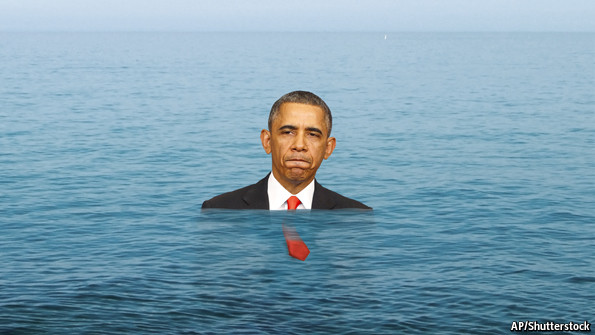


 It now appears that the new theory being espoused by the Obama administration is the use of extreme demand side economics. The theory being that each dollar of government spending can increase the nation’s gross domestic product by more than a dollar. In some arguments the multiplier is as high as 1.5 times.
 Larry Kudlow's latest take on President-elect Obama's stimulus package.
